
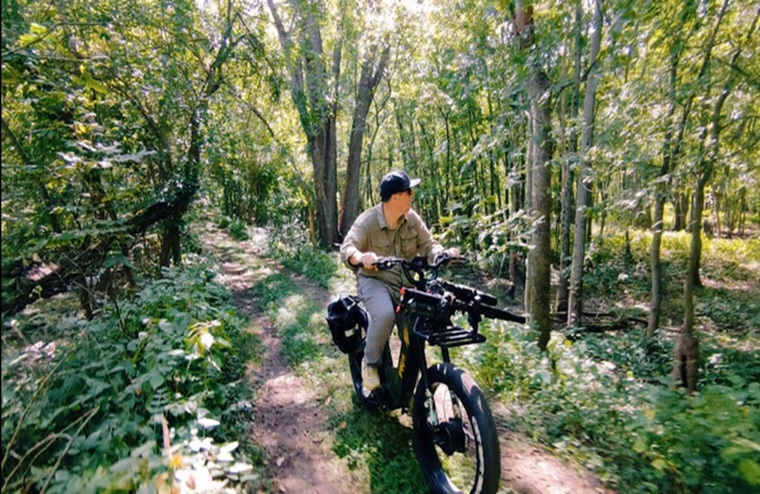
A hard physical boundary defines the traditional backcountry camping trip. If you want to experience the absolute silence of deep public lands, you have to pack fifty pounds of gear onto your spine and hike for six hours. If you want to bring the luxuries of a large cooler, heavy canvas tents, and cast-iron cookware, you are trapped in a crowded, drive-in campground surrounded by generator noise and car doors slamming.
But as we push into the 2026 outdoor season, that boundary has officially dissolved.
The rise of high-torque utility e-bikes has created a completely new style of wilderness exploration: Overland E-Bike Camping. By serving as silent, motorized pack mules, these machines allow you to bypass locked forestry gates, leave the car-camping crowds miles behind, and transport a week’s worth of heavy gear deep into the backcountry without breaking a sweat or burning a drop of gasoline.
If you are looking to trade the crowded campgrounds for absolute isolation, here is the honest, field-tested reality of how to set up, pack, and manage an e-bike for a multi-day wilderness expedition.
1. Choosing the Base: The Cargo Tractor
You cannot simply strap fifty pounds of camping gear onto a standard commuter e-bike and head into the woods. The frame will flex under the weight, the motor will overheat on the first mountain switchback, and you risk snapping a rim miles from civilization.
A proper wilderness camping e-bike requires a specific engineering layout:
[Front Rack: Sleep System] ======( Reinforced Frame )====== [Rear Rack: Heavy Panniers]
||
[High-Torque Motor] ===(Hitch)=== [Cargo Trailer]
- The Mid-Drive Muscle: Skip the rear-hub motors for backcountry terrain. When you are hauling a loaded chassis up a steep, sandy fire road, you need a high-torque mid-drive motor (like the Birch eBikes). By running its power directly through your bike’s mechanical gears, a mid-drive can downshift into a low gear, multiplying its torque to crawl up vertical grades without burning out its electronic controller.
- Structural Payload Capacity: Look for a bike with an integrated, welded rear rack that is a native part of the aluminum frame—not a bolt-on accessory. Your target spec should be a minimum total payload capacity of 400 to 450 pounds to safely support your body weight, your camp infrastructure, and extra water supplies.
2. The Golden Rule of Packing: Lower the Center of Gravity
The biggest mistake new e-bike campers make is treating their bike like a pack horse—stacking heavy coolers, tents, and water jugs high up on the rear rack.
When you place heavy weight high above the wheels, the bike becomes top-heavy. The moment you drop into a loose gravel rut or try to navigate a tight forest trail at fifteen miles per hour, that high mass will catch the momentum, causing the handlebars to twitch and making the bike incredibly difficult to balance.
Instead, execute your packing layout like a pro overland rider:
- The Side-Load Strategy: Put your heaviest, densest gear (stoves, water bladders, food bags) into waterproof panniers mounted as low as possible on the sides of the rear wheel.
- The Balanced Front: Balance the rear weight by mounting a lightweight, high-volume item (like your down sleeping bag or bivy tent) in a cradle wrapped around the front handlebars or an integrated front rack.
- The Trailer Option: If you are planning a week-long stay or traveling with family, skip the frame bags entirely and hook up a single-wheel cargo trailer. Because single-wheel trailers are narrow and lean with the bike, you can navigate tight, single-track mountain trails without the bike constantly fighting your balance.
3. Power Management in the Deep Woods: Preventing a Dead Rig
Here is the thing nobody tells you in the promotional overland videos: A loaded e-bike burns through watt-hours at an alarming rate. When you add forty pounds of camping gear and a trailer to a 90-pound fat-bike, your motor has to draw significantly more current from the controller to maintain speed. If you leave the bike in “Turbo” or full throttle mode while climbing a long mountain ridge, a battery that usually lasts forty miles on pavement can easily be completely drained in twelve miles.
If your battery dies ten miles behind a locked forestry gate, pedaling a 130-pound loaded rig back to your vehicle is a brutal, agonizing experience. Manage your power using this field-tested protocol:
- Downshift Early, Don’t Throttle: When approaching a ridge climb, do not rely on the thumb throttle or crank up the electronic assist level. Instead, manually downshift the bike’s mechanical gears into the lowest gear possible. Let the mechanical leverage do the work, keeping the motor RPMs high and the battery draw low.
- The Dual-Battery Setup: For multi-day trips, look for a bike with a dual-battery terminal design. Carrying a second, hot-swappable battery inside your pannier effectively doubles your exploration radius, allowing you to establish a remote base camp and still have plenty of juice for day-scouting side trips.
- Solar Recharge Reality: Can you charge an e-bike with a portable solar panel at camp? Yes, but don’t expect a quick fix. To charge a massive 48V or 52V battery, you need a dedicated solar controller (like a GZ Yeti or Geniverse ecosystem) paired with at least a 200W foldable solar blanket. It will take a full day of unobstructed summer sunlight to juice up your battery, making it ideal for base-camp layouts rather than moving camps daily.
4. Backcountry Survival Upgrades
Before you leave the cell service behind, make sure your bike is outfitted with these non-negotiable backcountry upgrades:
| Upgrade | What it Protects | Why is it Non-Negotiable |
| Tannus Armour Inserts | Your Inner Tubes | Changing a rear flat tire on a heavy utility e-bike on a muddy mountain pass is a nightmare. Thick foam inserts prevent thorns and sharp shale from ruining your trip. |
| 4-Piston Hydraulic Brakes | Your Safety | Standard bicycle brakes will fade and fail under the immense kinetic heat generated by stopping a 300-lb total payload descending a steep mountain trail. |
| Lights-Out Mode / Blackout Switch | Your Discretion | If you are arriving at a public wilderness boundary late at night, the ability to kill your massive LED dashboard glare prevents you from blinding yourself or disturbing local wildlife. |
E-bike camping is not about cheating the outdoor experience; it is about expanding your map. It allows the hunter to move deeper into public land, the angler to reach isolated alpine streams that see zero fishing pressure, and the weekend adventurer to pack high-quality, fresh food deep into the wilderness without destroying their knees or lower back. When you invest in a robust frame, balance your cargo low, and manage your battery voltage intelligently, the woods completely open up.
What does your dream backcountry campsite look like? Whether you are planning to traverse sandy desert washes or climb rocky Pacific Northwest fire roads, I can help you figure out the exact motor torque and gear-capacity layout to get you there and back safely!